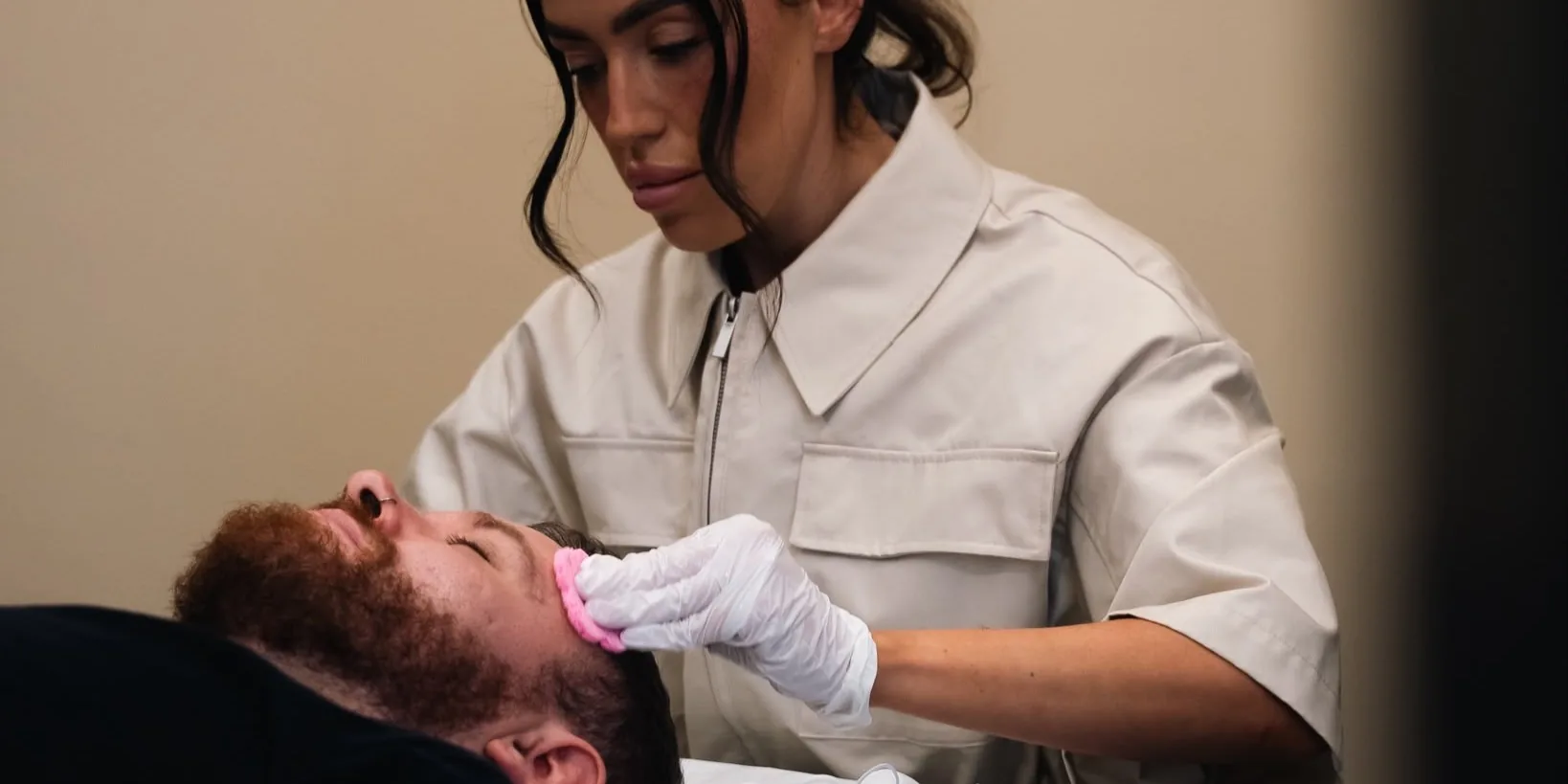
A carbon laser facial is one of the few skin treatments that does something visible straight away and still doesn't stop you going to work. Here's what it involves and what it's actually good for.
How it works
A thin layer of liquid carbon is applied to the face and left to settle into the skin and into open pores. The laser is then passed over the area. Carbon absorbs the laser energy strongly, so as the laser targets it, the carbon is broken apart and carries with it the dead skin, oil and debris it has bonded to.
The heat delivered at the same time is what stimulates the skin underneath, prompting it to firm and renew over the following weeks.
So it does two jobs at once: an immediate deep exfoliation and clean-out, and a slower stimulation that shows up later.
What it helps with
- Dull, tired-looking skin that has lost its brightness
- Enlarged or visibly congested pores
- Oily skin and blackheads
- Uneven texture and roughness
- Mild acne and the general congestion that comes with it
- Overall tone and clarity
It is not a treatment for deep lines, significant scarring or pigmentation disorders. Those need different tools, and you'll be told so rather than sold a course that won't do it.
What it doesn't do
It won't replace a skincare routine, it won't cure acne, and one session won't transform your skin. It's very good at what it does and honest clinics are clear about where that stops.
What a session is like
The carbon layer goes on and is left for a few minutes. You'll wear protective eyewear throughout. The laser pass itself feels warm, with a light tingling or prickling sensation and a clicking sound. Most people find it comfortable, and many find it oddly relaxing.
Allow around 30 to 45 minutes for the appointment.
Afterwards
Skin usually looks brighter immediately. Some redness is normal and typically settles within a few hours, occasionally into the next day.
- Avoid make-up for the rest of the day where you can.
- No saunas, steam rooms, hot yoga or heavy exercise for 24 hours.
- Keep it out of direct sun and wear a high SPF. Skin is more light-sensitive after treatment.
- Skip retinoids, acids and exfoliants for a few days.
- Drink plenty of water and keep the skin moisturised.
Because downtime is minimal, it's a treatment people often book before an event. Leave a few days rather than doing it the morning of.
How often
A single facial gives a visible lift. Lasting improvement in texture and congestion comes from a course, spaced a few weeks apart, followed by occasional maintenance. What suits your skin is agreed at consultation rather than sold as a fixed package.
Who it isn't suitable for
- Anyone pregnant or breastfeeding
- Anyone on medication that increases light sensitivity
- Anyone who has taken oral isotretinoin in the last six months
- Active cold sores, infections, open wounds or sunburn on the face
- Recently tanned skin, including fake tan
This page is general information, not medical advice. Whether this treatment suits your skin is assessed in person, and every course begins with a patch test.